
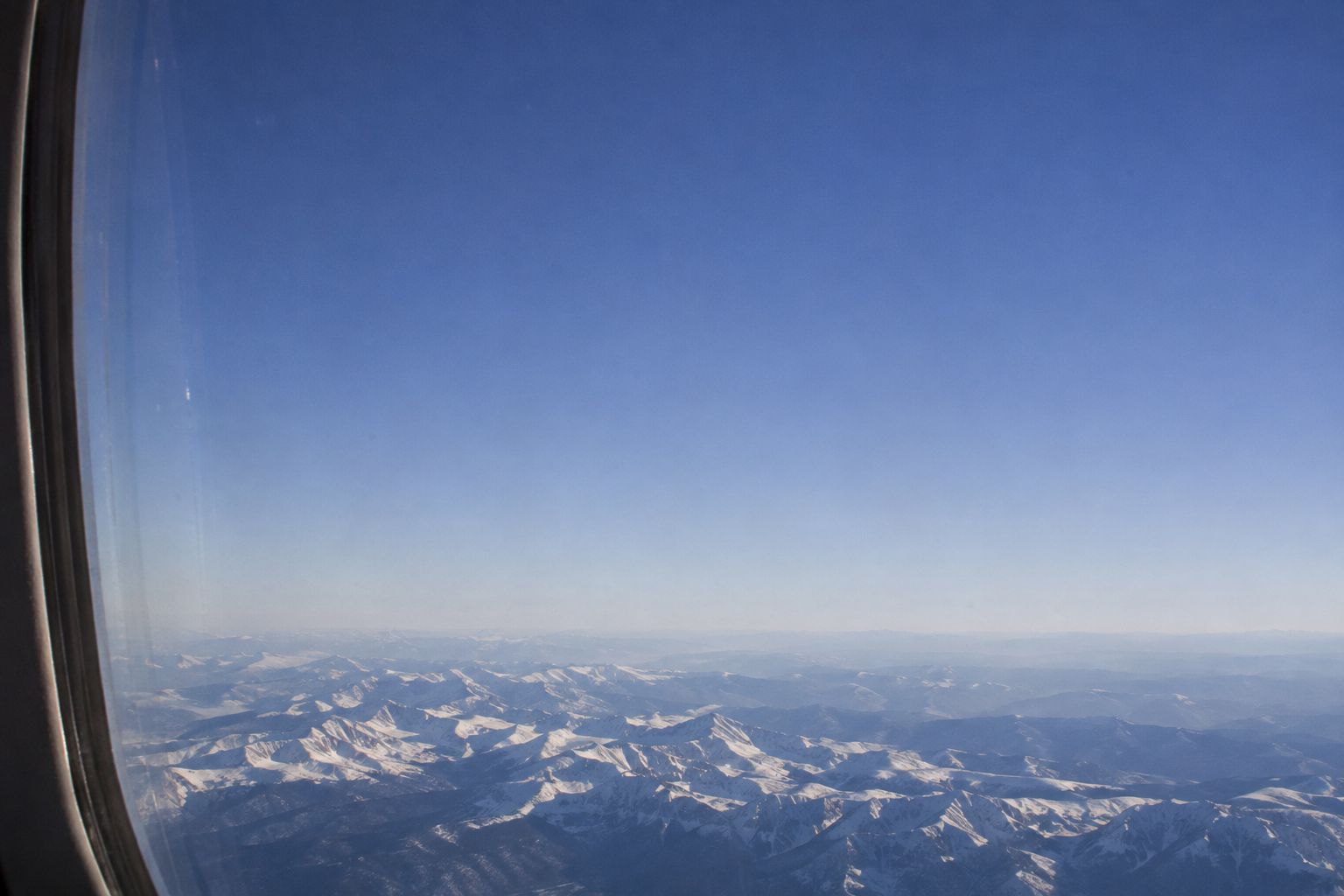
Denver to Jackson Hole usually sits at the top of the list, level with Albuquerque to Denver. In the version the Denver Gazette reported in August 2026, four of the five bumpiest routes in North America touch Denver. The list is a fair map of where the mountains are. It tells you very little about your flight on a given day.
| Rank | Route | Average turbulence score | Distance |
|---|---|---|---|
| 1 | Denver to Jackson Hole | 18.18 | 406 mi |
| 2 | Albuquerque to Denver | 18.18 | 350 mi |
| 3 | Jackson Hole to Salt Lake City | 17.68 | 205 mi |
| 4 | Denver to Salt Lake City | 17.54 | 390 mi |
| 5 | Bozeman to Denver | 17.22 | 524 mi |
The scores are as printed there. I couldn’t open the original ranking, and other outlets have reprinted versions with the top two the other way round. Distances are my great-circle figures.
Why mountains top it
Wind crossing a mountain range sets off waves in the air, and they can reach far above the peaks. The FAA’s handbook says the effects can at times extend past 60,000 feet, so cruising at 35,000 doesn’t put you over the top of them. The waves grow with the height of the range and with the wind blowing across it.
A gentle wave is a slow rise and fall, with little to feel beyond small changes in altitude and speed. The bumps come when a wave grows enough to break, like surf. Denver sits right where the air comes down off the Front Range, and Jackson, Salt Lake City and Bozeman are all in the same mountains. In summer those same places add afternoon storms, as the air over high, dry ground heats up.
Why short routes top it
The other half of the ranking is arithmetic. The score is an average, and short flights have less smooth air to average against.
Public flight records put Denver to Jackson Hole at about 66 minutes in the air. A 20-minute rough patch is about 30% of that. The same patch on a New York to San Francisco flight, at close to 6 hours in the air, is about 6%. You’d feel the same 20 minutes on both, and only one of them makes the list.
Short flights also spend much of their time climbing and descending through the lower air, where the ground stirs things up. A long flight has hours in smoother air to bring its number down.
What the list can’t tell you
An average over a year hides the days. Those routes have plenty of calm mornings and some rough afternoons, and the list can’t say which you’ll get. Wind across the mountains decides it, and that changes by the day.
The ranking also looks more meaningful than it is. First and fifth place are 5% apart, so a small change in a year’s weather can reorder the top of the table. I wouldn’t change a booking over it.
It isn’t an injury list either. In the NTSB’s study of 111 US airline turbulence accidents, thunderstorm-type turbulence was present in 64 and clear-air turbulence in 32, with mountain waves a smaller share. A route’s reputation and its record are different things.
I can’t check these numbers against anything better.
If you’re flying one of these
Take the morning flight in summer, when the afternoon storms haven’t built. In winter, time of day matters less and wind is what counts. Sit near the wing, and keep your belt on. If you want to know how a forecast for one of these flights should be read, start here.
There’s also a real reward. Coming into Jackson from Denver, the great circle puts the Tetons on the right, about 10 miles off. The approach on the day can change which side they’re on, but the view is the reason people fly this route, and it’s worth a few bumps.
A yearly average can’t speak for tomorrow. Skycap looks at the forecast for your flight and says whether it should be calmer, typical or bumpier than most. See how the ride forecast works