
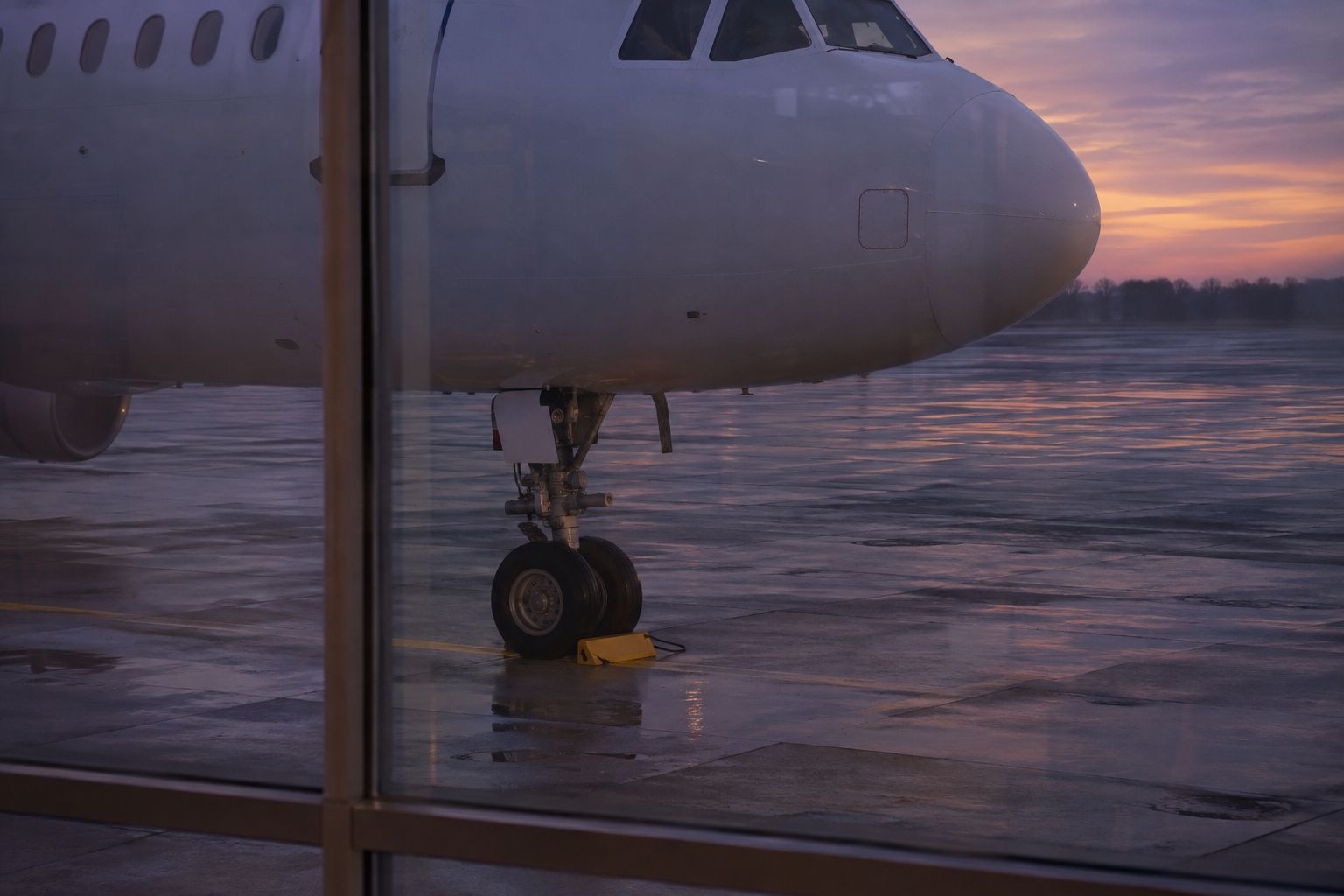
Nearly every sound on a normal flight is a machine doing a scheduled job, and they come in the same order each time. The loudest thump of the climb is the landing gear going away, seconds after liftoff. The sudden quiet a little later is the engines being turned down on purpose, and the plane is still climbing.
Times below are rough estimates for a 737 or A320 on a typical flight, based on published climb and descent rates. Airline, aircraft, airport and weather all shift them.
At the gate
Thuds under your feet
Bags going into the hold, and then the hold door closing.
The air stops or changes
On most jets the air that starts the engines is the same air that feeds the cabin vents, so the airflow can drop or go quiet for a minute or so around engine start. It comes back.
Pushback and taxi
A clunk and a small jolt
The tug connecting and starting to push. Then a rising whine, one engine at a time.
A whirring from the wings
The flaps moving to their takeoff setting, often during taxi. You can watch them slide out from a window behind the wing.
A dog barking under the floor
This one is real, and you’ll mostly hear it on Airbus single-aisle jets. Passengers call it the barking dog. The usual source is the power transfer unit, a device that lets one hydraulic system pressurize another, and it can run when a crew taxis on one engine to save fuel. It comes in short bursts near the wings, and you may hear it again after landing. It’s routine.
Regular thumps
The nose wheel crossing joints and lights in the pavement.
Takeoff
A rising roar, then a press into your seat
Takeoff thrust. The thumping speeds up and the whole cabin rumbles.
The rumble stops
That’s the wheels leaving the ground. It often feels as though the plane has gone strangely smooth, because it has.
A heavy thunk and a rattle, seconds after liftoff
The landing gear comes up once the plane is climbing, and the doors close over it. This is the loudest mechanical noise of the climb.
The first few minutes
The engines go quiet, and you feel as if you’re sinking
The most startling moment of the climb for many people, and the most routine. Crews cut power after takeoff to reduce noise over the neighborhood and save the engines. The FAA’s noise-abatement profile sets that no lower than 800 feet above the airport, and the height varies by airline and airport. The nose lowers a little with it, and your stomach reports a fall. The plane is still climbing.
Whirring again, plus a small settling feeling
The flaps coming back in, usually in stages, over the first few minutes as the plane speeds up.
A ding or two
Most chimes are crew signals: a call between the flight deck and the cabin, or a change in the belt sign. Each airline has its own code.
A push of speed, about 4 minutes in
Passing 10,000 feet, where the US 250-knot limit ends, the plane accelerates and the nose lowers again. This is also where the rule against unnecessary talk on the flight deck eases off, which is why you’ll often hear from the crew about now.
Cruise, from about 18 minutes
The engines settle, and what’s left is a steady rush of air and ventilation. It sits there for the rest of the flight, loud enough that you stop noticing it.
A change in engine note, mid-flight
A long flight will often climb a little as it burns fuel and gets lighter, or change altitude for a better ride or wind. The engines rise for a minute or two and settle again.
The way down
The engines go quiet again, roughly 25 minutes before landing
The start of the descent. Jets come down with the engines near idle, so this is the plane gliding on purpose. Your ears may notice next.
A rumble and a shiver from the wings
Speed brakes: panels that rise on top of the wing to add drag. The FAA’s handbook says there’s usually a certain amount of noise and buffeting. If you’re at a wing seat you can watch them lift.
Whirring in stages
Flaps going out again, for the slower speeds of the approach. Each stage can feel like a gentle pitch change.
A thud and a much louder rush of wind, a few minutes before touchdown
The landing gear going down. The wind noise stays until you land, because the gear is now hanging out in it.
Landing and after
A bump, then a roar
The touchdown, followed by reverse thrust. The engines are louder after landing than they were on the approach, and this is deliberate: the handbook explains that the exhaust is redirected to help slow the plane, most effectively at high speed. The panels on the wing pop up at the same moment to put the plane’s weight on its wheels so the brakes work.
The roar stops and the brakes take over
You’ll feel it as the seatbelt pressing into you.
The barking again, on an Airbus
Then the engines wind down at the gate.
If a sound isn’t here, look at the flight attendants. They hear this every day, and they’re the best instrument in the cabin. For bumps, there’s why the first twenty minutes are bumpy. If sounds are a large part of why you dread flying, this is what the studies say helps. And for something else to do on the climb, work out which side the sun will set on.
The sounds are the same on every flight, and the bumps aren’t. At the gate, Skycap lists the first twenty minutes of your flight, with what’s forecast on the climb. See how the flight page works