
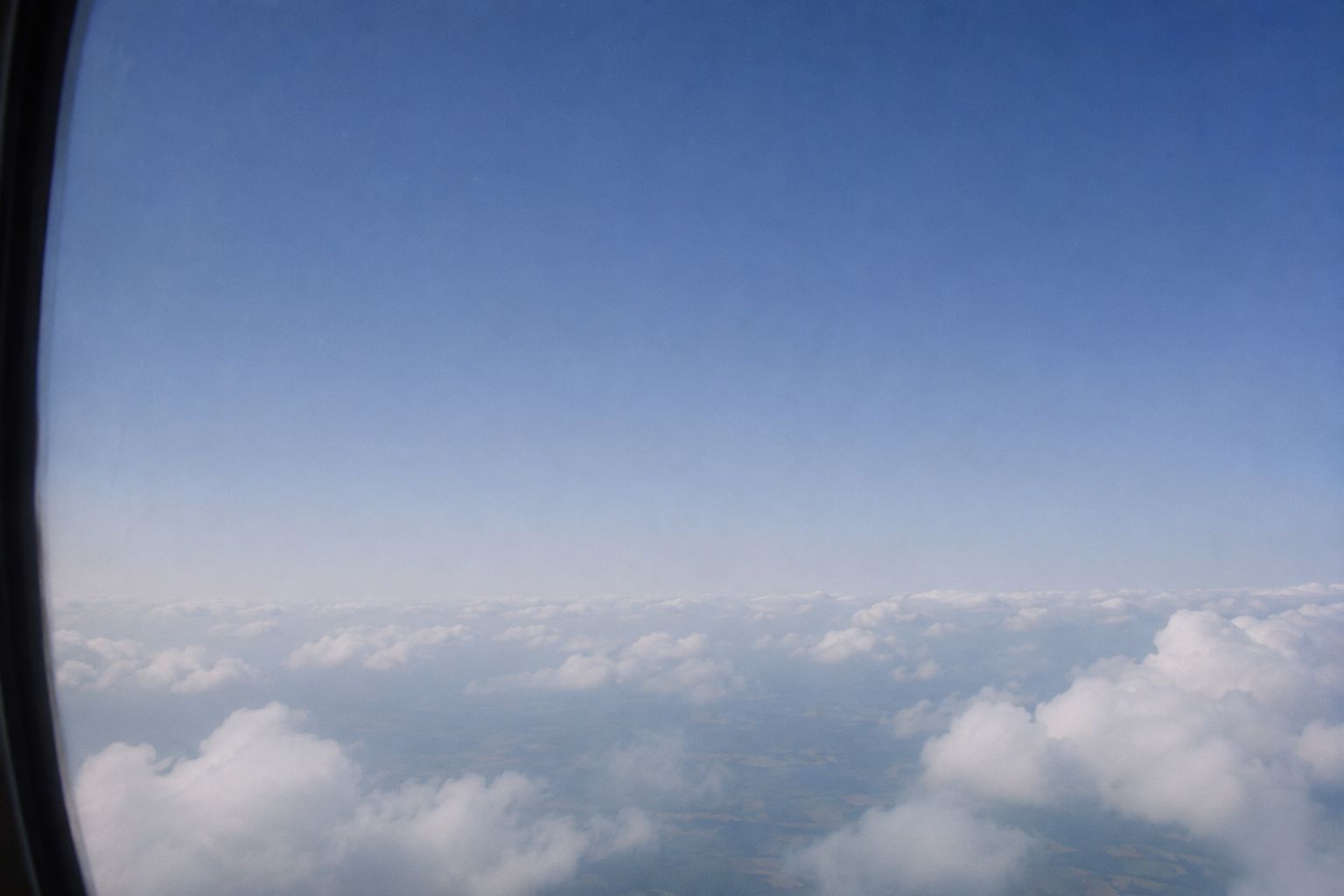
The bumps after takeoff come from the lowest layer of the atmosphere, where the sun heats the ground unevenly and the wind trips over whatever is in its way. A jet is through that layer in minutes. The FAA’s handbook says the air above the tops of puffy clouds is generally smooth, and a 737 reaches cruise altitude about 18 minutes after takeoff.
So the rough part has an end you can often see out the window.
The ground stirs the air
On a sunny day the ground warms the air sitting on it, and it does so in patches. Bare soil and plowed fields get hotter than water or leafy ground, so bubbles of warm air rise from some places and cooler air sinks between them. Flying through that feels like driving on a road with potholes you can’t see. The handbook says these currents are most active on warm summer afternoons when winds are light.
Wind adds a second source. Buildings and hills break a smooth flow into eddies, which get stronger with wind speed and rougher ground. A windy day at a coastal or mountain airport can be lively in January, with no sun involved.
Early mornings and nights can have their own version, when a cold layer sits near the ground under faster wind. The bump there comes from the two layers sliding past each other, and it’s usually confined to the lowest few thousand feet.
Why it stops
Rising air keeps rising until it has cooled to the temperature of the air around it. If it cools enough on the way, it makes a cloud. So those flat-bottomed cumulus clouds on a summer afternoon are markers: the handbook calls them signposts of this kind of turbulence, and says the top usually marks about where the rising currents end.
That gives you something to watch for. Expect bumps below and inside those clouds, and expect them to ease as you come out the top. How high that is depends on the day and the place. On a dry day there may be no clouds at all and the bumps still happen, with nothing to warn of them or show where they end.
The climb, by the clock
These are estimates for a Boeing 737-800, worked out from published climb rates. Real flights vary with weight and weather.
| After takeoff | Altitude | What you might notice |
|---|---|---|
| 2 minutes | 5,000 ft | Usually the busiest part of the climb, with the plane turning and the flaps coming up |
| 4 minutes | 10,000 ft | The nose may lower a little as the plane speeds up |
| 11 minutes | 24,000 ft | Usually above the fair-weather clouds |
| 18 to 19 minutes | 35,000 ft | Level off, and the engine note settles |
The nose lowers at 10,000 feet because below that height US rules cap speed at 250 knots. Above it, the jet accelerates. Some people read this as the plane leveling off or sinking. It’s still climbing. There’s more on that in every noise a plane makes.
If you get to choose
In summer, take the morning flight. It’s the one piece of schedule advice the physics backs: the ground hasn’t heated up yet, and the afternoon’s convection hasn’t started. In winter the time of day counts for less, and wind and fronts decide it.
When it doesn’t stop
Sometimes the bumps carry on past the clouds, usually for a different reason. High up, wind shear near the jet stream and waves off mountains can bump a plane in clear air, far above anything the ground is doing. Storm clouds also grow much higher than fair-weather ones, and crews steer around those. How to read a turbulence forecast covers those.
The same layers are waiting at the other end. About half of the turbulence injury accidents the NTSB studied happened during descent and approach, when flight attendants are often still up and working, though the NTSB notes that its figures don’t account for how long each phase lasts. The belt sign tends to come on for the way down. I’d have the belt fastened before that.
If bumps on the climb are what bother you most, it’s also worth reading where to sit. And for something better to look at once the wing stops shaking, here’s how to read the ground from cruise.
At the gate, Skycap lists the first twenty minutes of your flight: what’s forecast on the climb, and the altitude where the air should settle. See how the flight page works